Business heating
Hotel terrace heating that guests use in every season
A hotel terrace is a revenue space with a fixed opening calendar. Radiant heat extends the usable season without heating the sky.
Short answer: For hotel terraces, size at 80–100 W per m² of sheltered seating and zone the terrace into two or three control groups so housekeeping can warm the breakfast area without heating the whole courtyard. Wall units at 1.8–2.5 m or ceiling units under a canopy both work; IPX4 is the minimum for exposed installations.
The operational problem with outdoor guest space
Hotel terraces fail commercially for a simple reason: they are only pleasant for part of the year, but the rent, the furniture and the staff cost are paid all year. Gas patio heaters help, but they need fuel handling, produce combustion moisture, and in a breakfast courtyard the smell travels.
Electric far-infrared changes the operating model. There is no fuel, no open flame, no refuelling round, and no warm-up period: the terrace is comfortable within seconds of switching on, which matches how guests actually use it — a coffee at 07:30, a drink at 19:00, twenty minutes at a time.
Specifying for hotel operations
- Zone by space, not by building side: breakfast terrace, lobby terrace and pool bar should be separate circuits so each can run independently.
- Prefer wall mounting at 1.8–2.5 m along the façade — it keeps the ceiling line clean and avoids shadowing from parasols.
- Under a canopy or pergola, ceiling units free the walls and give even coverage across a dining layout.
- Choose a controller staff can use. The 13W series offers Tuya WiFi, an LCD remote and four power levels; simple on/off zoning with a wall switch is often the more reliable choice for seasonal staff.
- Ask for the load schedule and the certification pack at quotation stage; hotel engineering teams need both before signing off.
What guests notice
Radiant heat is silent and does not move air, so napkins do not lift and candles do not gutter — a small detail that matters in a terrace restaurant. Because the heater warms surfaces rather than air, the effect persists when a door opens, which is the moment convection systems lose their advantage.
Sizing guide
| Space | Area | Output | Model | Note |
|---|---|---|---|---|
| Balcony suite terrace | 8–10 m² | 1.0 kW | 13W 1.0 kW | Single unit with remote control; guest-adjustable. |
| Lobby terrace seating cluster | 20 m² | 1.8 kW | 13A / 13C 1.8 kW | Two units facing the seating group. |
| Breakfast courtyard | 30–40 m² | 2.4–3.2 kW × 2 | 13C 2.4 kW or 22B 3.2 kW | Zone with the indoor breakfast room circuit. |
| Pool bar pergola | 30 m² | 2.2 kW | 22B 2.2 kW | Ceiling or beam mounting under the canopy. |
| Rooftop event terrace | 50 m²+ | 4.0 kW | 14A 4.0 kW (380 V) | Multiple units, windbreak first. |
Hotel terraces are usually semi-open and intermittently occupied, so nameplate coverage overstates real comfort. Treat these figures as a layout starting point and confirm against a floor plan.
Specifications at a glance
Recommended models
13W Series — WiFi and LCD control
Guest-facing terraces need controls that do not require a technician; WiFi plus LCD remote keeps operation inside normal front-of-house routines.
22B Series — 380 °C surface
Where a terrace is open on two sides, the higher surface temperature delivers usable warmth at a longer throw than a 300 °C panel of the same wattage.
JHD028-B ceiling heater — 2.0 kW
A ceiling format for pergolas and covered walkways where wall space is unavailable or visually unacceptable.
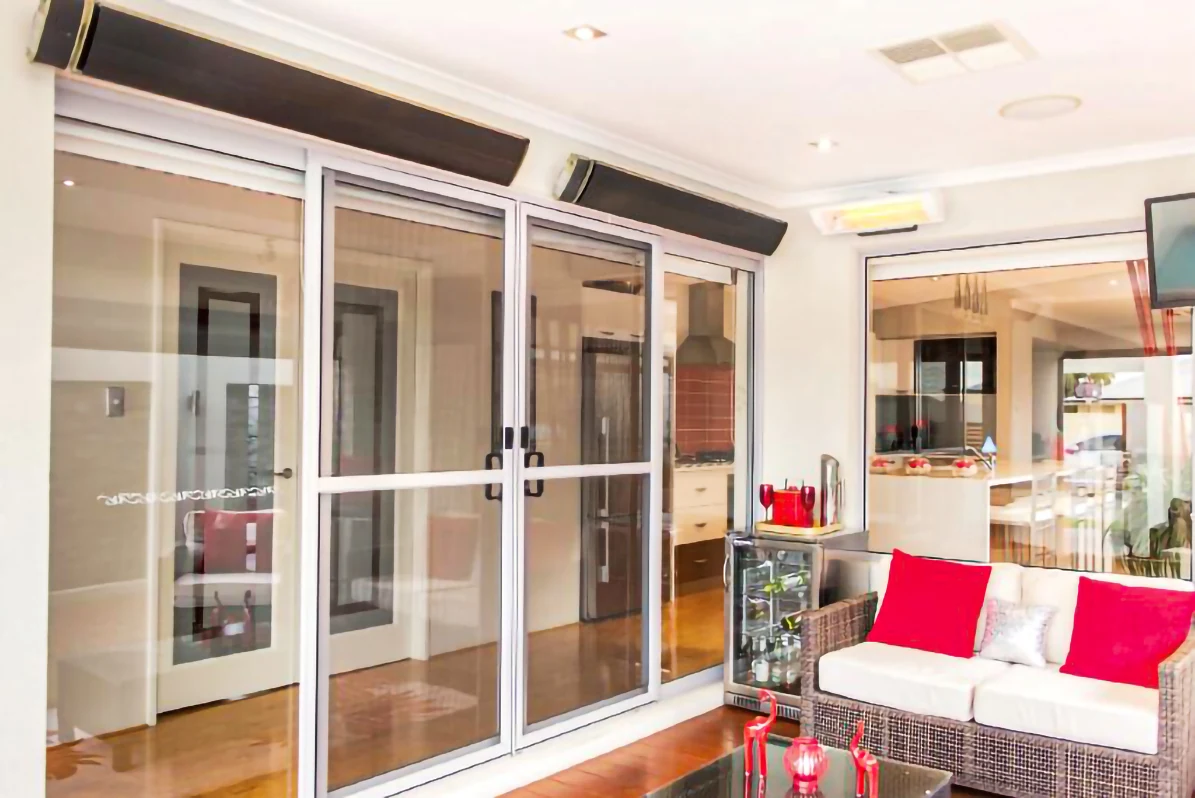
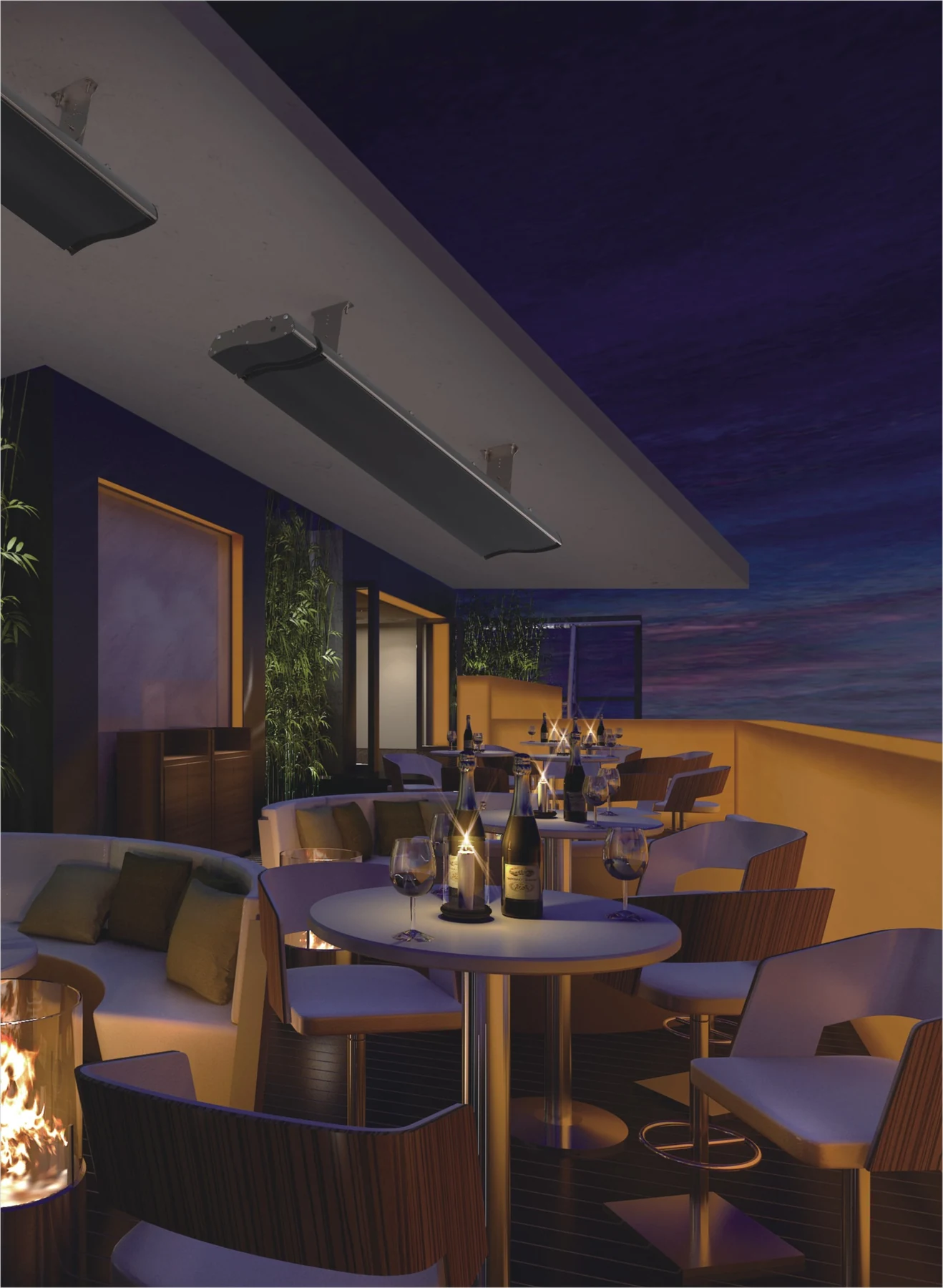
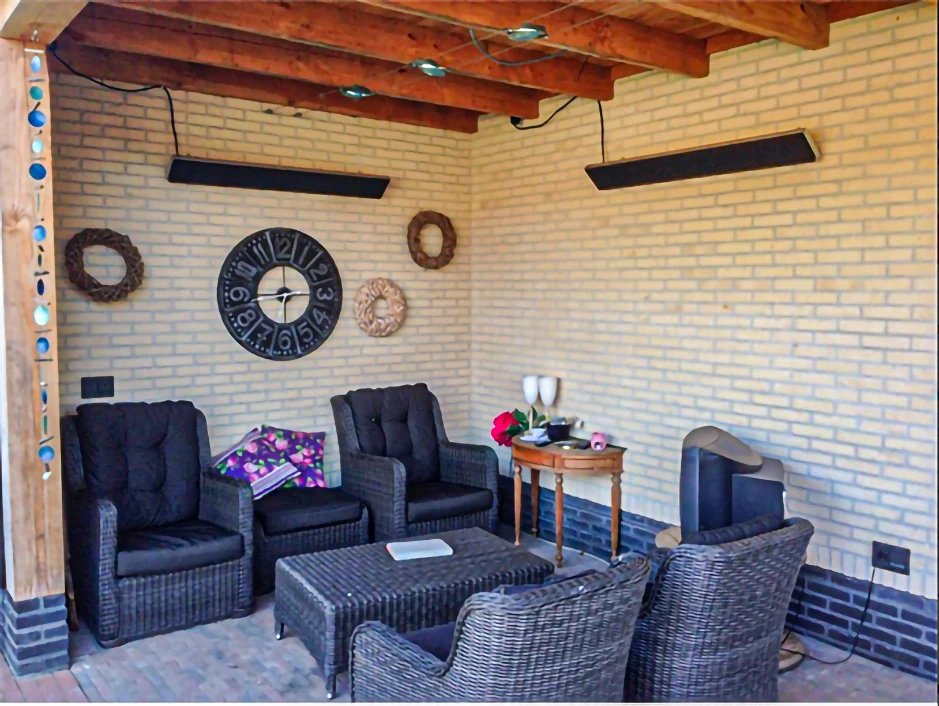
Installed examples
Frequently asked questions
Can hotel guests control the terrace heaters themselves?
Yes. The 13W series supports Tuya WiFi control from a phone plus an LCD remote, and every range can be put on a simple wall switch or thermostat. For guest rooms and suite terraces we usually recommend a single unit on a local switch so there is nothing to pair or explain at check-in.
How long does a terrace heater take to feel warm?
Radiant warmth is perceptible within seconds because the energy reaches skin and clothing directly rather than heating the air first. There is no boiler or element warm-up cycle to wait for, which is why radiant suits short, repeated use such as breakfast and pre-dinner drinks.
Are the heaters suitable for coastal hotels?
IPX4 covers rain splash, and the housings are powder-coated, but IPX4 is not a salt-air rating. On coastal sites we advise specifying stainless fasteners, rinsing the casing at seasonal intervals, and keeping the unit under a canopy where possible. See the coastal terraces page for the full checklist.
Do you supply certification documents for hotel engineering sign-off?
Yes. CE, CB, SAA, EMC, RoHS, SASO and ISO 9001:2015 documentation is available with the quotation, together with dimensional drawings and a circuit load schedule. Send the destination market and we will confirm which certificates apply.
Can the heaters be integrated with building management?
The 13W series is app- and WiFi-based rather than a native BMS interface. For BMS integration, specify contactor-based zoning on the distribution board: the heaters behave as simple resistive loads, so any BMS with relay outputs can switch them.
Send us the plan and we will size it
Share the seated area, mounting surfaces and destination market. You get a layout, a circuit load schedule and the certification pack for your market — no obligation.
Request a layout