Business heating
Coastal terrace heating: what IPX4 does and does not protect against
Salt air is the hardest environment for any outdoor electrical product. The honest answer is a specification and maintenance regime, not a miracle coating.
Short answer: For coastal terraces, specify IPX4 heaters, mount them under a canopy or soffit so rain and direct spray do not reach the unit, use stainless fasteners, and plan a rinse-and-inspect routine at the start and end of each season. IPX4 covers rain splash; it is not a salt-air or corrosion rating.
What IPX4 actually means
IPX4 means protection against water splashing from any direction. It is the appropriate rating for a heater installed outdoors under a canopy, where rain can be driven onto the casing. It does not mean the unit can be immersed, pressure-washed, or left unprotected in direct sea spray.
This distinction matters most on coastal sites, where buyers often assume an outdoor rating covers salt. It does not: IP ratings address water ingress, while salt resistance depends on housing material, coating integrity and fastener grade. We state this explicitly because a heater that fails in eighteen months on a seafront does nobody any good.
Specifying for salt exposure
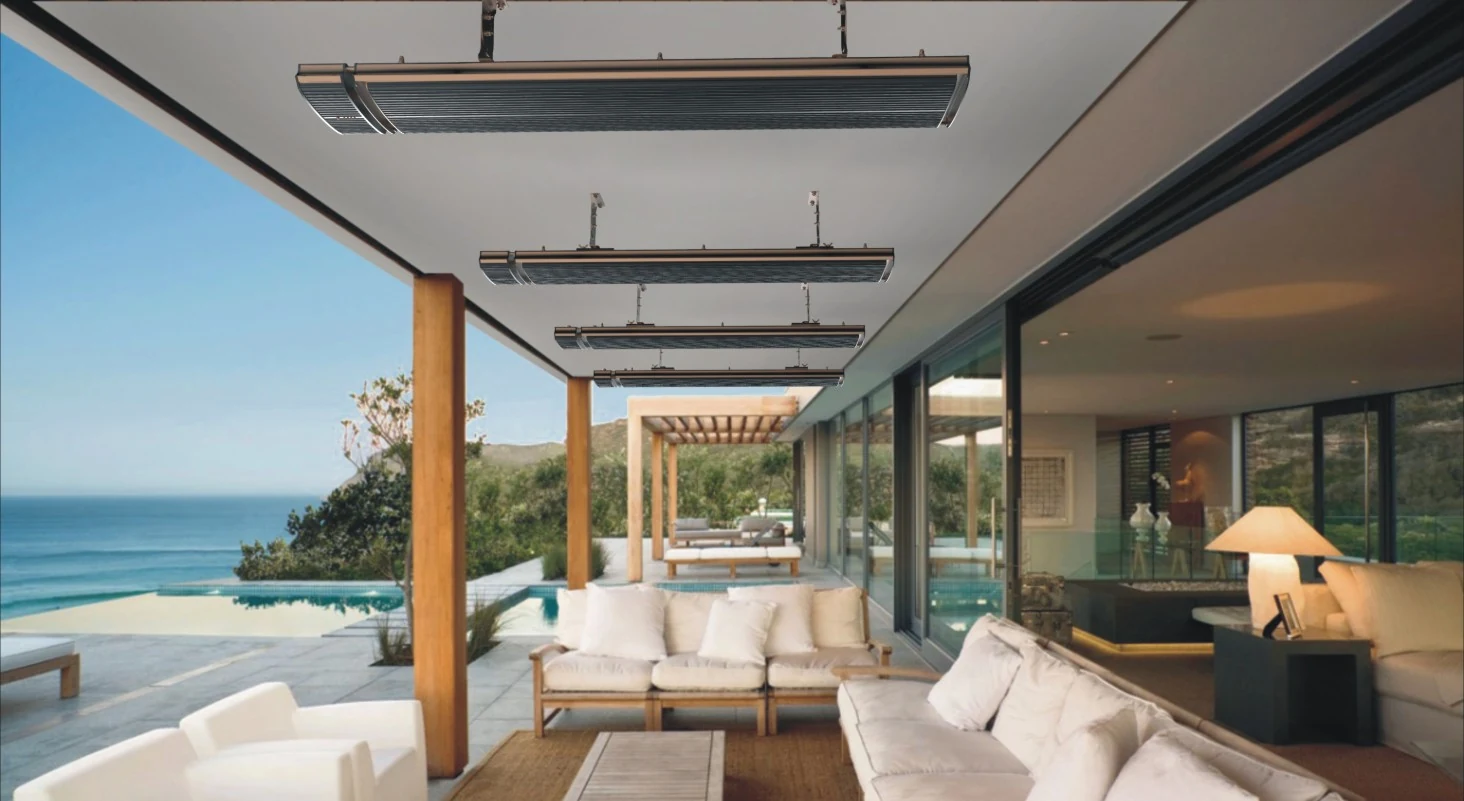
- Mount under a canopy, soffit or pergola beam so the unit is shielded from direct rain and spray; the radiant face should still see the seating.
- Use stainless steel fasteners and brackets — the fixing, not the heater, is usually the first thing to corrode.
- Keep the powder-coated casing intact; touch in any chip promptly, because corrosion starts at coating damage.
- Avoid mounting directly above the seaward edge of a balcony, where wind-driven spray reaches the unit.
- Rinse the casing with fresh water and inspect terminals at seasonal intervals — quarterly in exposed locations.
- Confirm the circuit has RCD protection, particularly where salt deposits can bridge insulation over time.
Layout on a covered coastal terrace
On a covered terrace the canopy does most of the work: it blocks rain, reduces wind speed and improves the effective coverage of each heater. That means a 2.2 kW unit which holds 30 m² in still air can perform close to its rated coverage under a good canopy, even with the sea 30 m away.
Where the terrace is only partly covered, treat the covered portion as the comfort zone and place heaters at its inland edge facing outward, so guests sit inside the radiant field rather than at its boundary. Windbreaks — glass screens or planters — reduce both discomfort and salt deposition on the heaters themselves.
Sizing guide
| Space | Area | Output | Model | Note |
|---|---|---|---|---|
| Covered balcony, sheltered from spray | 10 m² | 1.0 kW | 13W 1.0 kW | Single unit under the soffit. |
| Pergola terrace, sea 50 m+ away | 20 m² | 1.8 kW | 13A / 13C 1.8 kW | Beam mounting, stainless fixings. |
| Beachfront terrace with side screens | 30 m² | 2.2 kW × 2 | 22B 2.2 kW | Screens reduce spray and improve coverage. |
| Sea-facing restaurant terrace | 40 m² | 3.2 kW × 2 | 22B 3.2 kW | Keep units back from the seaward edge. |
| Exposed deck, direct spray | — | Not recommended | Relocate or build a canopy | IPX4 is not rated for direct, sustained spray. |
On coastal sites the canopy, not the heater, determines success. If the unit cannot be shielded from direct spray, the correct answer is to change the installation rather than to buy a higher rating — our range is IPX4, and we will say so.
Specifications at a glance
Recommended models
13A Series — 1.0 to 4.0 kW
A proven wall panel with IPX4 protection and a simple, sealed casing that is easy to inspect and clean seasonally.
22B Series — 1.6 to 3.2 kW
Higher surface temperature holds comfort on a breezy waterfront where a 300 °C panel loses throw.
13W Series — WiFi control
Lets a coastal venue switch zones remotely and monitor use without staff walking the terrace in bad weather.
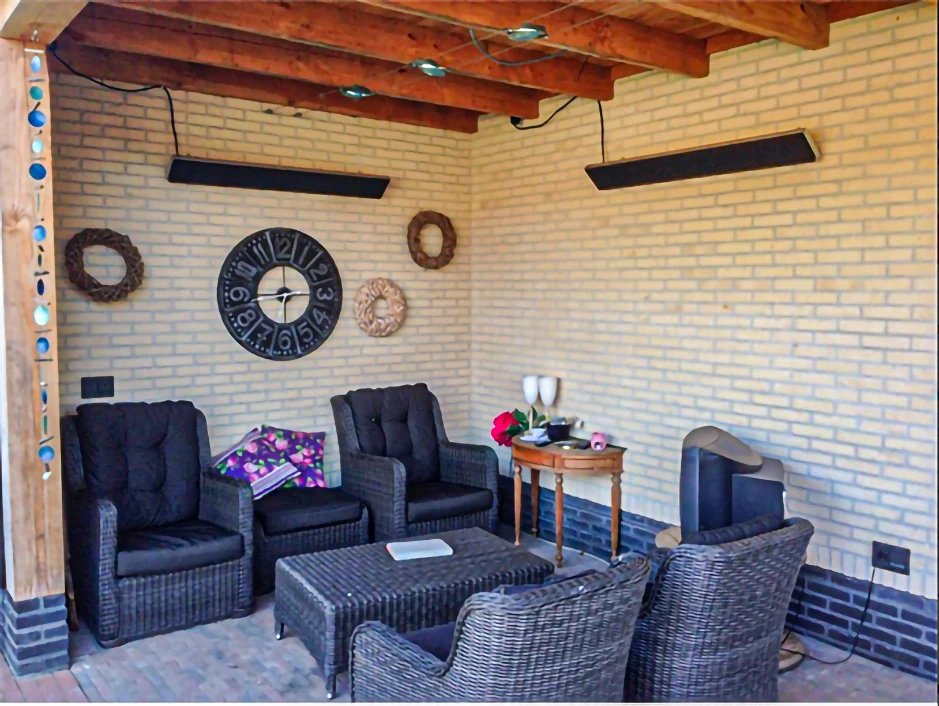
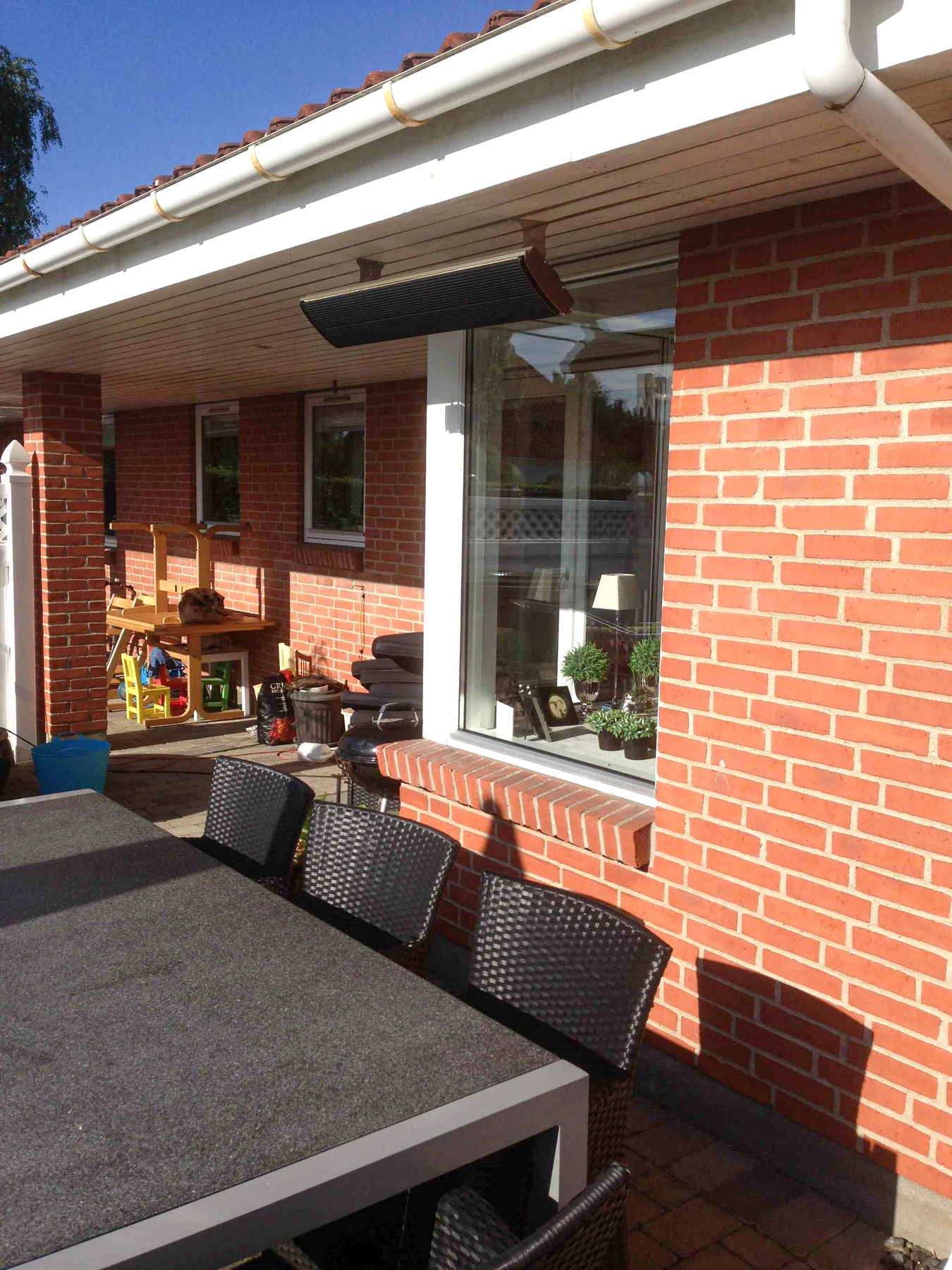
Installed examples
Frequently asked questions
Are IPX4 heaters suitable for coastal areas?
IPX4 units are suitable where they are shielded from direct spray — under a canopy or soffit. IPX4 addresses water splash, not salt corrosion, so coastal installations also need stainless fasteners, intact coating and a seasonal rinse-and-inspect routine.
Will salt air corrode the heater?
Salt accelerates corrosion on any metal, including powder-coated steel. The practical controls are shielding, intact coating, stainless fixings and periodic rinsing. We would rather set that expectation than claim a marine rating our range does not carry.
Can I mount a heater directly above the sea edge?
We would advise against it. Sustained wind-driven spray exceeds IPX4, and the unit will be the first thing to fail. Move the heater inland, add a screen, or install a canopy so the unit is protected while still facing the seating.
How often should coastal heaters be maintained?
Inspect and rinse quarterly on exposed sites, and at the start and end of each heating season as a minimum. Check terminals for salt deposits, confirm the RCD trips, and touch in any coating damage before it becomes corrosion.
Do you supply stainless steel brackets?
We can supply stainless fasteners and brackets as part of the order — specify the coastal requirement when requesting a quotation so the correct grade is included rather than substituted on site.
Send us the plan and we will size it
Share the seated area, mounting surfaces and destination market. You get a layout, a circuit load schedule and the certification pack for your market — no obligation.
Request a layout