Business heating
Warehouse heating that warms the workstation, not the warehouse
Heating a 4,000 m² distribution centre to comfort temperature is unaffordable. Heating eight workstations is not.
Short answer: For warehouses and workshops, use spot heating: mount radiant panels 1.8–2.5 m above or beside each fixed workstation and size at 1.0–2.4 kW per position. Radiant heat does not depend on holding air temperature, so an unheated building shell is not a barrier — but air movement from doors and forklifts must be managed.
The economics of spot heating
A warehouse is thermally leaky by design: roller doors, loading bays, high roofs and constant vehicle movement. Conditioning that volume is not a realistic target, and most operators accept a cold shell with local comfort at the positions where people actually stand still.
Radiant spot heating matches that operating model. A 1.8 kW panel above a packing bench delivers comfort to the operator within seconds, regardless of whether the surrounding air is 8 °C or 14 °C, because the energy is absorbed by the person and the bench rather than the air. Energy use scales with the number of positions in use, not with building volume.
Where to mount in an industrial space
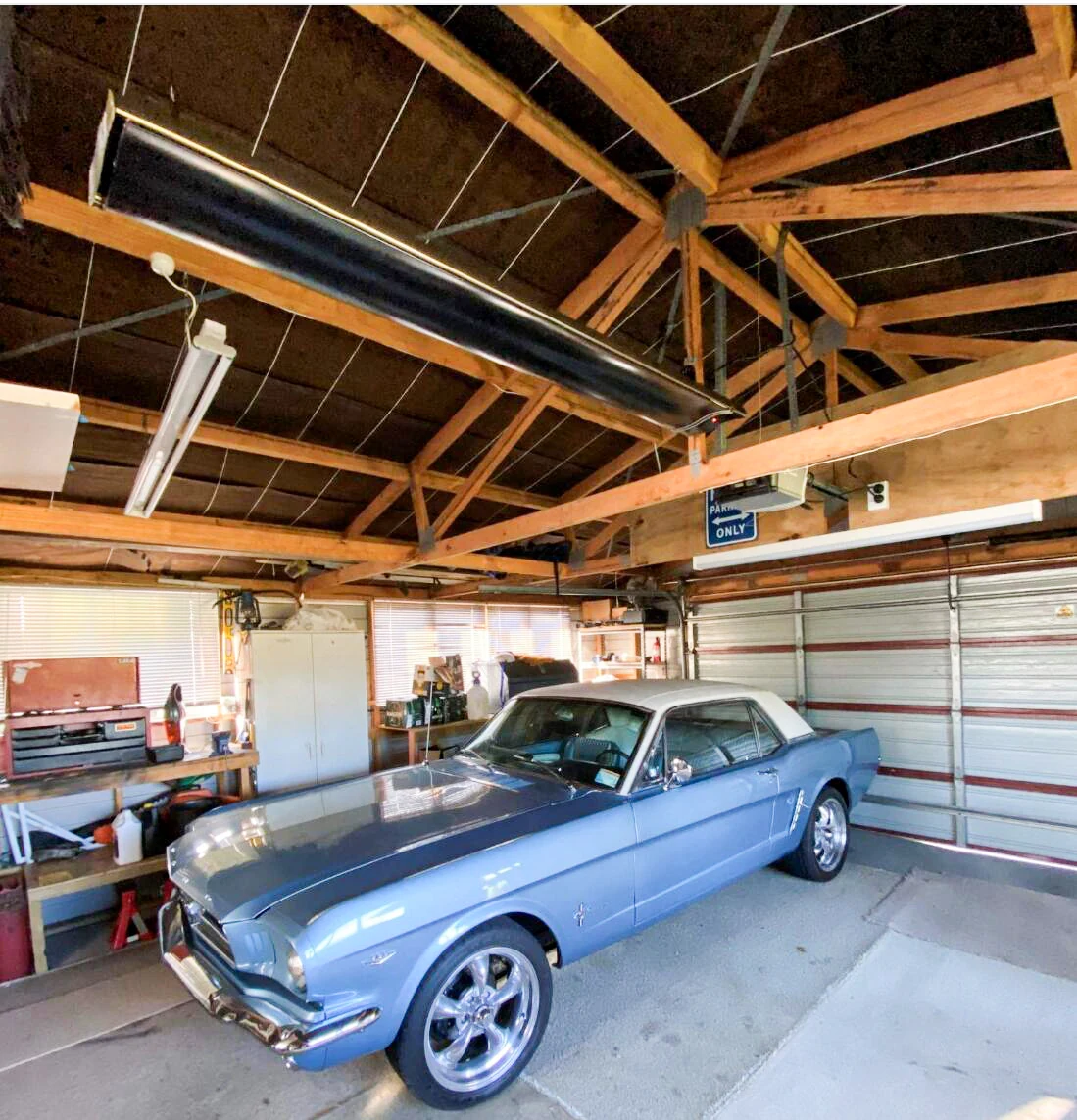
- Directly above a fixed workstation at 1.8–2.5 m, or on a nearby column angled toward the operator — not aimed across an open aisle.
- Keep units clear of forklift and pallet-truck traffic; where vehicles pass beneath, use ceiling mounting with a minimum clearance agreed with your safety officer.
- Avoid positions in the direct path of loading-bay doors, where cold air movement will strip the radiant layer.
- Use IPX4 units in wash-down or damp areas; confirm the enclosure rating against your cleaning regime.
- Provide local switching at each position so heat runs only when the bench is manned.
What radiant does not do
Radiant heating does not dry a damp building, prevent condensation on stored stock, or protect water pipes from frost. Where those outcomes matter, radiant is a comfort measure layered on top of a building fabric and ventilation strategy — not a substitute for one. We would rather say that plainly than sell heaters as building services.
Sizing guide
| Space | Area | Output | Model | Note |
|---|---|---|---|---|
| Packing bench or inspection station | 1 workstation | 1.0–1.8 kW | 13A / 13B 1.0–1.8 kW | Mounted above and slightly in front of the operator. |
| Assembly cell, 2–3 operators | 10–15 m² | 2.4 kW | 13C 2.4 kW | One unit per cell, switched locally. |
| Loading bay desk | 10 m² | 2.2 kW | 22B 2.2 kW | Higher surface temperature for draughty bay openings. |
| Workshop bay, open front | 20–30 m² | 3.2 kW | 22B 3.2 kW | Aim away from the open door; add a screen if possible. |
| Cold store anteroom | 10 m² | 2.4 kW | 13C 2.4 kW | Comfort at the doorway; not a frost-protection system. |
Spot heating is sized per position, not per square metre of building. Give us the number of fixed positions and their layout — a workstation plan produces a far more accurate quotation than a floor area.
Specifications at a glance
Recommended models
13B Series — 1.0 to 3.2 kW
A compact panel that fits between racking and ceiling services at typical workstation heights.
22B Series — 380 °C surface
Higher surface temperature holds comfort where doors open frequently and air movement is unavoidable.
JHG019-B wall-mounted patio heater — 2.0 kW
A plug-in wall unit for positions that need heat before a fixed electrical installation is signed off.
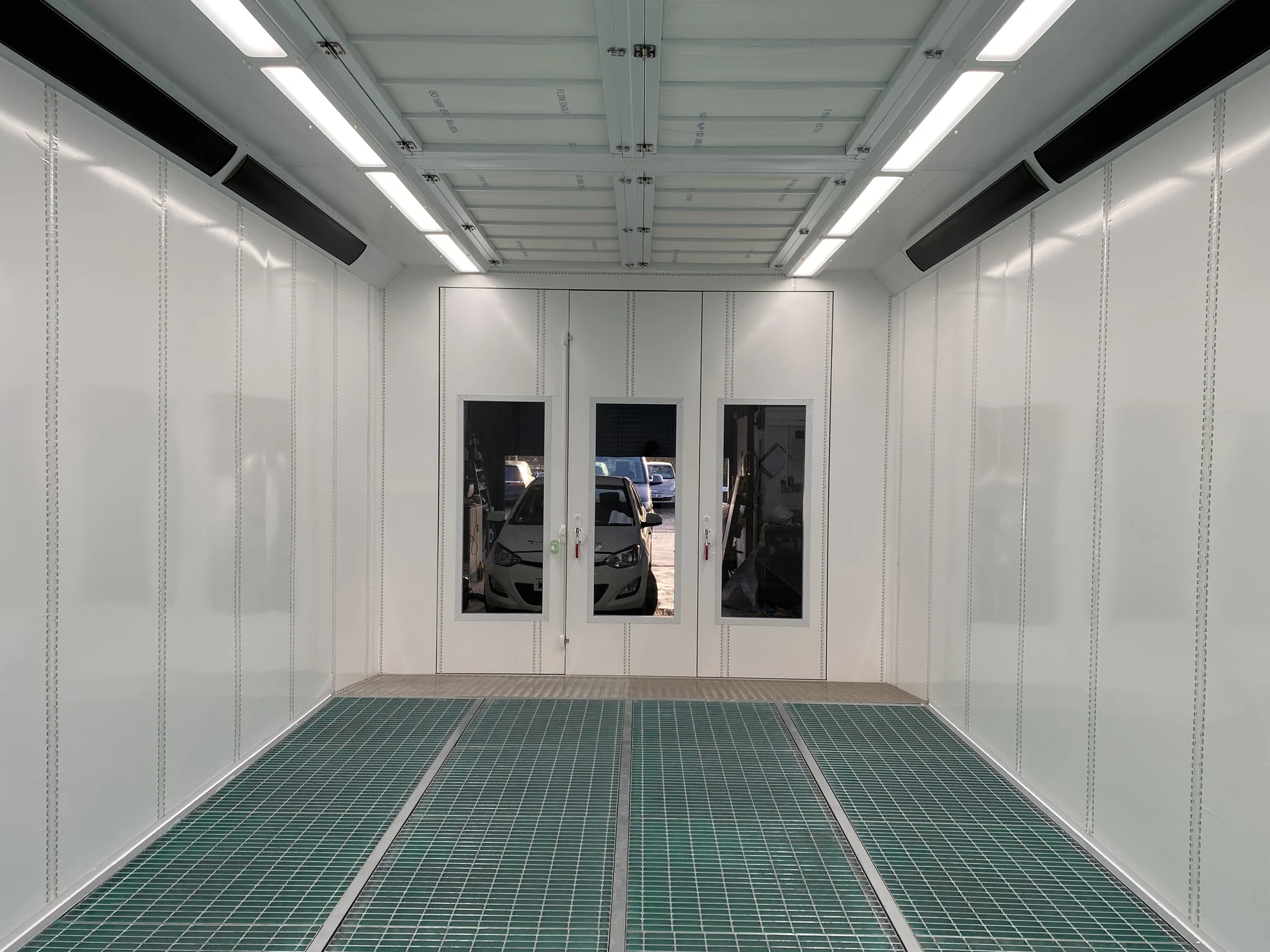
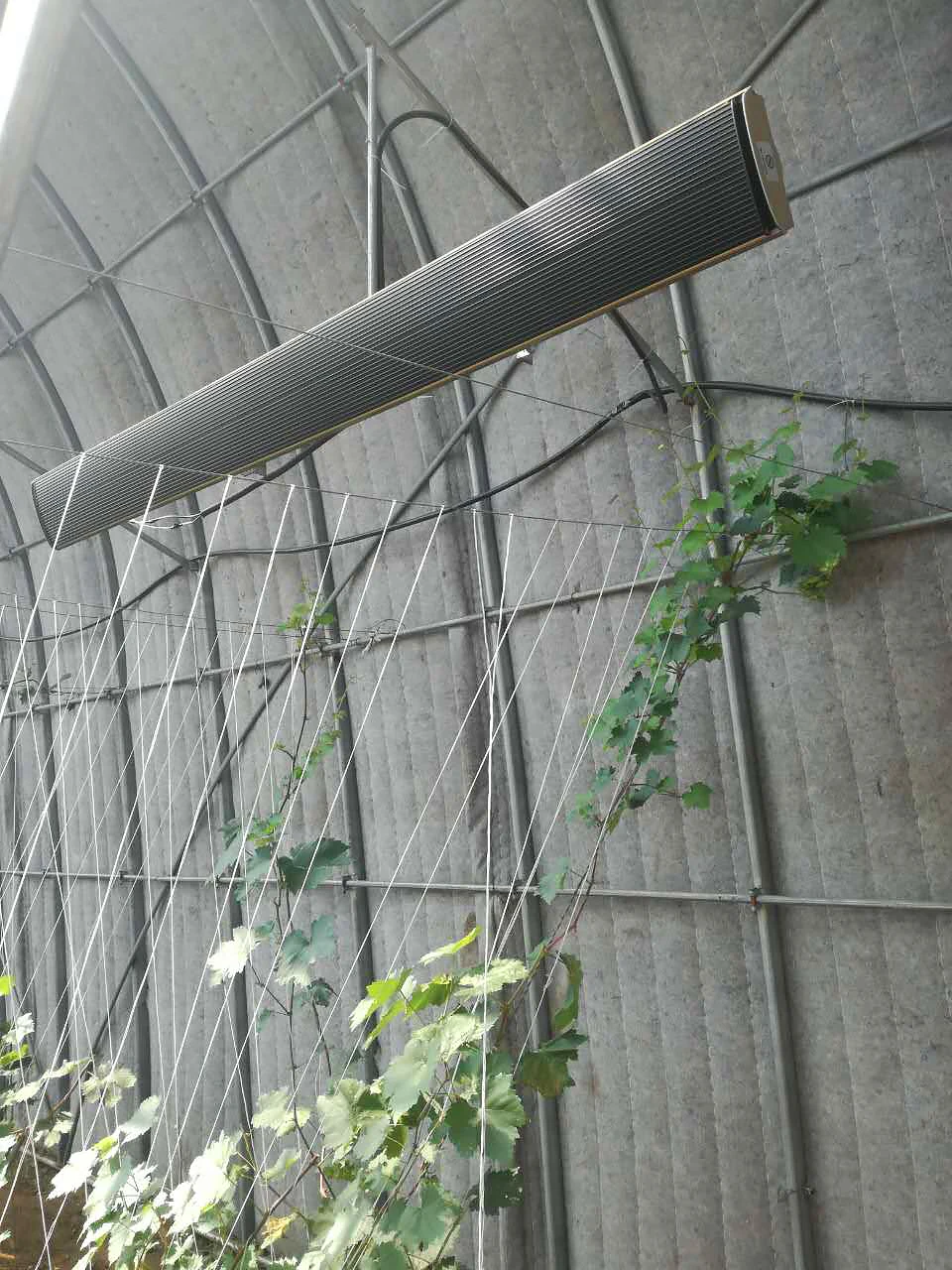
Installed examples
Frequently asked questions
Can infrared heaters heat an entire warehouse?
Not economically, and we would not recommend trying. Radiant heat is a spot solution: it keeps people comfortable at fixed positions while the building shell stays cold. Heating a full distribution centre requires a building fabric and ventilation strategy first.
Will radiant heaters stop condensation on stored stock?
No. Radiant panels warm people and surfaces in the radiant path, not the air or the whole building envelope. Condensation control needs ventilation, insulation and dew-point management. We are explicit about this because mis-specified radiant heating leads to disappointed buyers.
How close can a heater be to a workstation?
Our recommended mounting band is 1.8–2.5 m above floor level. Closer than that, the radiant intensity at head height becomes uncomfortable; further away, output is wasted. For seated operators, mounting slightly in front of rather than directly overhead avoids heating the top of the head only.
Are the heaters safe around forklifts and moving stock?
Wall or column mounting above vehicle height is the safe arrangement. Where a unit must sit over an aisle, agree clearance with your safety officer and protect the cable route; IPX4 covers splash, not impact, so physical protection matters in vehicle areas.
Can I install them myself in a workshop?
The electrical work should be carried out by a qualified electrician: a 2.4 kW unit draws 10.4 A at 220–240 V and needs a properly protected circuit. Mounting and aiming are straightforward, and we supply bracket drawings and the load schedule for your electrician.
Send us the plan and we will size it
Share the seated area, mounting surfaces and destination market. You get a layout, a circuit load schedule and the certification pack for your market — no obligation.
Request a layout